Florida Probate Rule 5.040
Notice
Amended Oct. 1, 2026See what changed
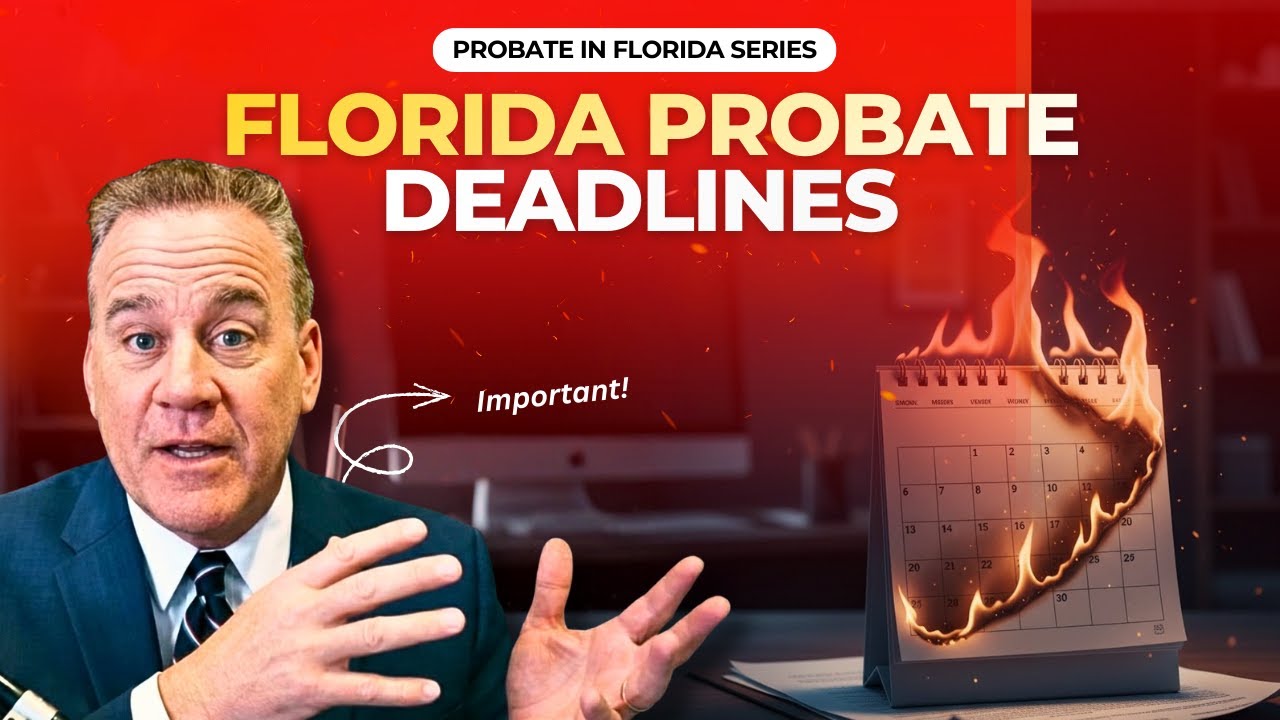 Watch Matt Weidner explain this rule3 videos · 2 articles from Weidner LawJump to commentary ▾
- (a)Formal Notice.
- (1)Procedure for Formal Notice. When formal notice is given, the pleading or motion must be served on interested persons, together with a notice requiring the person served to serve written defenses on the person giving notice within 20 days after service of the notice, exclusive of the day of service, and to file the original of the written defenses with the clerk of the court either before service or immediately after service, and notifying the person served that failure to serve written defenses as required may result in a judgment or order for the relief demanded in the pleading or motion, without further notice.
- (2)Effect of Service of Formal Notice. After service of formal notice, informal notice of any hearing on the pleading or motion must be served on interested persons, provided that if no written defense is served within 20 days after service of formal notice on an interested person, the pleading or motion may be considered ex parte as to that person, unless the court orders otherwise.
- (3)Manner of Service of Formal Notice.
- (A)If an attorney has appeared for the interested person under the Florida Rules of General Practice and Judicial Administration or the Florida Probate Rules, formal notice must be served on the person by delivery to the attorney in conformity with the requirements of Florida Rule of General Practice and Judicial Administration 2.516.
- (B)If an attorney has not appeared for the interested person under the Florida Rules of General Practice and Judicial Administration or the Florida Probate Rules, formal notice must be served in the following manner:
- (i)by sending a copy by any commercial delivery service requiring a signed receipt or by any form of mail requiring a signed receipt;
- (ii)as provided in the Florida Rules of Civil Procedure for service of process;
- (iii)as otherwise provided by Florida law for service of process; or
- (iv)by first-class mail when only in rem or quasi in rem relief is sought against a person if:
- a.registered or certified mail service to the addressee requiring a signed receipt is unavailable and if delivery by commercial delivery service requiring a signed receipt is also unavailable;
- b.delivery under subdivision (a)(3)(B)(i) is attempted and is refused by the addressee; or
- c.delivery under subdivision (a)(3)(B)(i) is attempted and is unclaimed after notice to the addressee by the delivering entity.
- a.
- (i)
- (A)
- (4)Persons to be Served. Service of formal notice under (a)(3)(B)(i) and (a)(3)(B)(iv) must be made on the following:
- (A)service on an interested person who has filed a request for notice must be made by delivery to the interested person at the address given in the request for notice;
- (B)service on an incapacitated person or a person with a developmental disability must be made by delivery:
- (i)to the person at the person’s usual place of abode; and
- (ii)to the person’s legal guardian at the legal guardian’s usual place of abode or regular place of business or, if the person does not have a legal guardian, to the person having care or custody of the person at the person’s usual place of abode or regular place of business;
- (i)
- (C)service on a minor whose disabilities of nonage are not removed must be made by delivery to the persons designated to accept service of process on a minor under chapter 48, Florida Statutes, at the minor’s usual place of abode or regular place of business;
- (D)service on any other individual must be made by delivery to the individual at the individual’s usual place of abode or to any person authorized to receive service of a summons on behalf of the individual as provided in chapter 48, Florida Statutes; or
- (E)service on a corporation or other business entity must be made by delivery to the corporation or other business entity as provided in chapter 48, Florida Statutes.
- (A)
- (5)Completion of Service. Service of formal notice under subdivision (a)(3)(B)(i) will be complete on receipt by the person to whom delivery is made. Service of formal notice under subdivision (a)(3)(B)(ii) will be complete as provided in the Florida Rules of Civil Procedure for service of process. Service of formal notice under subdivision (a)(3)(B)(iii) will be complete as provided by Florida law for service of process. Service of formal notice under subdivision (a)(3)(B)(iv) will be complete upon mailing.
- (6)Proof of Service. Proof of service under subdivision (a)(3)(B) must be by verified statement of the person serving formal notice and there must be attached to the verified statement the receipt signed by the person to whom delivery was made or other evidence satisfactory to the court that delivery was made. If service is obtained under subdivision (a)(3)(B)(iv), the verified statement must state the basis for service by first-class mail, the date of mailing, and the address to which the first-class mail was sent, and evidence of delivery is not required. Proof of service under subdivisions (a)(3)(B)(ii) or (a)(3)(B)(iii) must be made as provided by Florida law for service of process.
- (1)
- (b)Informal Notice. When informal notice of a petition or other proceeding is required or permitted, it must be served as provided in rule 5.041.
- (c)“Notice” Defined. In these rules, the Florida Probate Code, and the Florida Guardianship Law “notice” means informal notice unless formal notice is specified.
- (d)Formal Notice Optional. Formal notice may be given instead of informal notice at the option of the person giving notice unless the court orders otherwise. When formal notice is given instead of informal notice, formal notice must be given to all interested persons entitled to notice. When formal notice is given instead of informal notice, that notice does not modify any time period otherwise specified by statute or these rules.
- (e)In the Manner Provided for Service of Formal Notice. If a document is served in the manner provided for service of formal notice under subdivision (a)(3)(B), service is completed as provided in subdivision (a)(5) and proof of service must be in the manner set forth in subdivision (a)(6).
Notes
Committee Notes
Formal notice is the method of service used in probate proceedings and the method of service of process for obtaining in rem jurisdiction over the person’s interest in the estate property. The court does not acquire personal jurisdiction over a person by service of formal notice. “The manner provided for service of formal notice” is as provided in rule 5.040(a)(3). Informal notice is the method of service of notice given to interested persons entitled to notice when formal notice is not given or required.
Reference in this rule to the terms “mail” or “mailing” refers to use of the United States Postal Service.
Rule History
- 1975
- Implements section 731.301, Florida Statutes.
- 1977
- Reference to elisor.
- 1980
- Editorial changes. Clarification of time for filing defenses after formal notice. Authorizes court to give relief to delinquent respondent from ex parte status; relief from service on numerous persons; allows optional use of formal notice.
- 1984
- Editorial changes. Eliminates deadline for filing as opposed to serving defenses after formal notice; defines procedure subsequent to service of defenses after formal notice; new requirements for service of formal notice on incompetents and corporations; defines when service of formal notice is deemed complete; provisions relating to method of service of informal notice transferred to new rules 5.041 and 5.042; eliminates waiver of notice by will.
- 1988
- Editorial changes. Committee notes revised. Citation form changes in committee notes.
- 1991
- Subdivision (b) amended to define informal notice more clearly.
- 1992
- Editorial changes. Committee notes revised. Citation form changes in committee notes.
- 1996
- Subdivision (a) amended to permit service of formal notice by commercial delivery service to conform to 1993 amendment to section 731.301(1), Florida Statutes. Editorial changes.
- 2001
- Editorial changes in subdivision (a)(3)(A) to clarify requirements for service of formal notice.
- 2003
- Committee notes revised.
- 2005
- Subdivision (a)(3)(A) amended to delete requirement of court approval of commercial delivery service.
- 2006
- Committee notes revised.
- 2007
- Committee notes revised.
- 2007
- New subdivision (a)(3)(A)(iv) inserted in response to Cason ex rel. Saferight v. Hammock, 908 So. 2d 512 (Fla. 5th DCA 2005), and subsequent subdivisions renumbered accordingly. Committee notes revised.
- 2008
- Subdivision (a)(3)(A)(iii) revised to include “person with a developmental disability.” Committee notes revised.
- 2010
- Subdivision (d) amended to clarify that the optional use of formal notice when only informal notice is required does not modify any time period otherwise specified by statute or rule. Committee notes revised.
- 2012
- Subdivision (b) revised to reflect amendment to rule 5.041.
- 2016
- Subdivision (e) created to specify when service in the manner provided for service of formal notice is completed. Committee notes revised.
- 2019
- Subdivision (a) reformatted for easier reading and corrected syntax. Subdivision (a)(3)(D) amended to provide for service by first-class mail when only in rem or quasi in rem relief is sought under certain circumstances. Committee notes revised.
- 2020
- Committee notes amended.
- 2023
- Subdivision (a)(6) is amended to note evidence of formal notice is not required when sent by first-class mail. Subdivision (e) is amended to refer to subdivision (a)(5). Committee notes revised.
- 2025
- Subdivision (a)(3) is amended to permit e- service of formal notice on represented interested persons. Committee notes revised.
- 2026
- Committee notes revised.
References
Statutory References
- § 1.01(3), Fla. Stat. Definitions. ch. 48, Fla. Stat. Process and service of process. ch. 49, Fla. Stat. Constructive service of process.
- § 393.12, Fla. Stat. Capacity; appointment of guardian advocate.
- § 731.105, Fla. Stat. In rem proceeding.
- § 731.201(18), (22), Fla. Stat. General definitions.
- § 731.301, Fla. Stat. Notice.
- § 731.302, Fla. Stat. Waiver and consent by interested person.
- § 733.212, Fla. Stat. Notice of administration; filing of objections.
- § 733.2123, Fla. Stat. Adjudication before issuance of letters.
- § 733.502, Fla. Stat. Resignation of personal representative.
- § 733.613, Fla. Stat. Personal representative’s right to sell real property.
- § 733.6175, Fla. Stat. Proceedings for review of employment of agents and compensation of personal representatives and employees of estate.
- § 733.901, Fla. Stat. Final discharge. ch. 743, Fla. Stat. Disability of nonage of minors removed.
- § 744.106, Fla. Stat. Notice.
- § 744.301, Fla. Stat. Natural guardians.
- § 744.3085, Fla. Stat. Guardian advocates.
- § 744.3201, Fla. Stat. Petition to determine incapacity.
- § 744.331, Fla. Stat. Procedures to determine incapacity.
- § 744.3371, Fla. Stat. Notice of petition for appointment of guardian and hearing.
- § 744.441, Fla. Stat. Powers of guardian upon court approval.
- § 744.447, Fla. Stat. Petition for authorization to act.
- § 744.477, Fla. Stat. Proceedings for removal of a guardian.
Rule References
- Fla. Prob. R. 5.025 Adversary proceedings.
- Fla. Prob. R. 5.030 Attorneys.
- Fla. Prob. R. 5.041 Service of pleadings and documents.
- Fla. Prob. R. 5.042 Time.
- Fla. Prob. R. 5.060 Request for notices and copies of pleadings.
- Fla. Prob. R. 5.180 Waiver and consent.
- Fla. Prob. R. 5.560 Petition for appointment of guardian of an incapacitated person.
- Fla. Prob. R. 5.649 Guardian advocate.
- Fla. Prob. R. 5.681 Restoration of rights of person with developmental disability.
- Fla. R. Gen. Prac. & Jud. Admin. 2.505 Attorneys.
- Fla. R. Gen. Prac. & Jud. Admin. 2.516 Service.
- Fla. R. Civ. P. 1.070 Process.
- Fla. R. Civ. P. Form 1.902 Summons.

Commentary from Matt Weidner
Probate attorney, Weidner Law, St. Petersburg. Videos open in a player; articles open on WeidnerLaw.com.
Florida Probate Deadlines You Must Know
Deadlines are one of the most important and most misunderstood parts of Florida probate. Attorney Matthew Weidner walks through critical notice deadlines — filing the original will within 10 days, opening probate, creditor claim periods, and more. Miss one of these and rights can be permanently lost.
Florida probate has hard deadlines for creditors — miss the deadline and the claim is GONE
Creditor claims in Florida probate are governed by strict statutory deadlines. Once the window closes, no court can revive it.
The 3 Biggest Reasons Florida Probate Is So Hard
Florida probate attorney Matthew Weidner reveals the 3 pain points destroying most Florida probate cases — grief delays, document chaos, and heir conflict — and how to overcome them.